VCIC
Aalto
UNC
D

Unique Strategies - Deep Due Diligence

Simulations inspired by military war-games... Moving beyond static analysis to actively simulate scenarios and test assumptions with AI can indeed yield much richer insights, forcing participants to confront potential realities rather than just theorize.

Here's a list of creative ways to use LLM chats to "war game" their insights, projections, and assumptions for a startup during the due diligence and the formulation of a bullet-proof investment thesis:

Creative AI Simulation & Testing Techniques("War Gaming" for Due Diligence)

Goal:

Go beyond static best/worst/base cases. Test how core strategies hold up against specific persona reactions.

Technique:

Define a key strategic plank or milestone from the Curen analysis (e.g., achieving €50/MWh LCOS, securing first utility pilot). Then, prompt different LLM personas (Skeptic, Competitor, Target Customer) to react specifically to that plank.

Creative Prompt Example (Gemini/GPT-4o):
"Act as a Skeptical Venture Capitalist specializing in hard tech. Curen's investment thesis relies heavily on achieving a €50/MWh LCOS using secondary copper sources within 3 years post-seed funding. Given the historical challenges in scaling novel battery chemistries and potential copper price volatility, what are the top 3 reasons this specific LCOS target/timeline is likely unrealistic? What specific proof points would you need to see during the next 18 months to gain confidence?"
Impact:

Forces students to anticipate specific objections and prepare data-driven counterarguments or adjust their assumptions.

Illustration for 1. Dynamic Persona-Based Scenario Stress-Testing
Goal:

Anticipate and evaluate the impact of competitor actions beyond just listing them.

Technique:

Propose a specific successful action by Curen (e.g., announcing a major funding round, landing a key partnership). Prompt an LLM acting as a specific competitor (using info gathered via Perplexity/Search) to outline their likely strategic response.

Creative Prompt Example (Gemini/GPT-4o):
"Act as the Head of Strategy for Invinity Energy Systems (Vanadium Flow Batteries). Curen (Copper Flow Battery startup) just announced a strategic partnership with a major European utility for a 10 MWh grid stabilization project, directly competing in one of your target segments. Outline your 3-pronged counter-strategy over the next 6 months. Consider tactical moves in marketing (emphasizing vanadium's track record?), R&D (accelerating next-gen development?), sales (targeted undercutting?), or lobbying."
Impact:

Helps assess the resilience of Curen's competitive advantage and highlights potential market dynamics.

Illustration for 2. Competitive Counter-Move Simulation
Goal:

Test product-market fit and sales strategy assumptions against realistic customer pushback.

Technique:

Develop detailed target customer personas (e.g., Utility Procurement Manager, Renewable Project Developer). Have the LLM embody that persona and conduct a simulated sales meeting or Q&A session where the student pitches Curen.

Creative Prompt Example (Gemini/GPT-4o):
"You are a Procurement Manager for a mid-sized US utility focused on grid modernization. I represent Curen, offering a novel copper-based flow battery for 8-12 hour duration storage, claiming lower LCOS and better sustainability than vanadium. Your primary concerns are proven reliability (bankability), integration complexity with existing SCADA systems, and long-term operational support. Conduct a simulated Q&A session. Ask me tough, specific questions based on your concerns. What level of technical validation and performance guarantees would you require before even considering a pilot?"
Impact:

Uncovers weaknesses in the value proposition or GTM strategy, identifies key evidence needed for customer adoption.
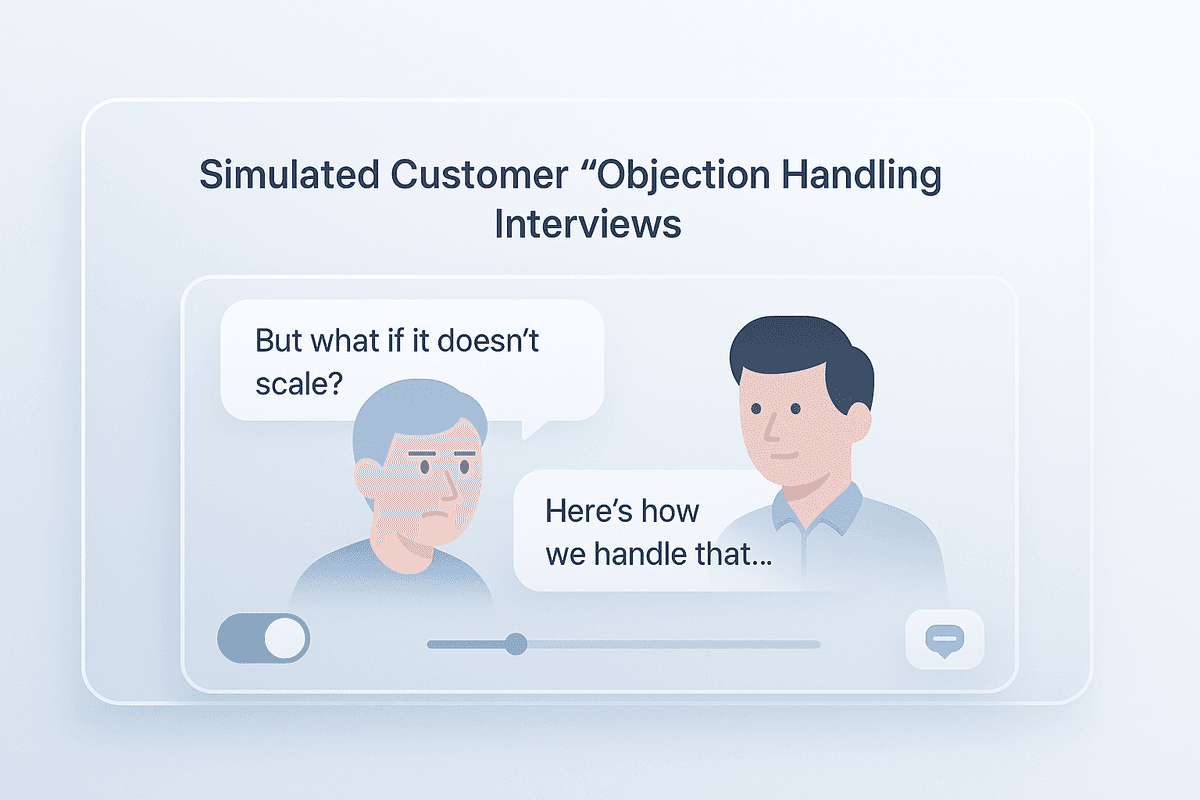
Illustration for 3. Simulated Customer "Objection Handling" Interviews
Goal:

Stress-test financial projections against pessimistic or unexpected internal/external factors.

Technique:

Instruct an LLM (acting as a "Pessimistic CFO" or "External Shock Simulator") to critique key financial assumptions (sales growth, COGS reduction, OpEx) or introduce specific negative scenarios (e.g., funding delays, input cost spikes, slower adoption). Use LLMs capable of calculation (like GPT-4o/Gemini Advanced) to explore the quantitative impact of these changes.

Creative Prompt Example (Gemini/GPT-4o):
"Act as a Red Team financial analyst. Review Curen's baseline 5-year projection [Provide key assumptions: Yr 3 sales = 1MW @ €X/kWh, COGS reduction = 15%/yr, Seed funding = €2M]. Now, simulate the impact on cash runway and the required Series A amount/timing if BOTH occur: 1) The first major customer deployment is delayed by 9 months. 2) Copper prices increase unexpectedly by 30% in Year 2, impacting COGS. Recalculate the funding needs and identify the point of potential insolvency under this scenario."
Impact:

Highlights financial vulnerabilities, quantifies risks, and informs contingency planning/funding strategy.
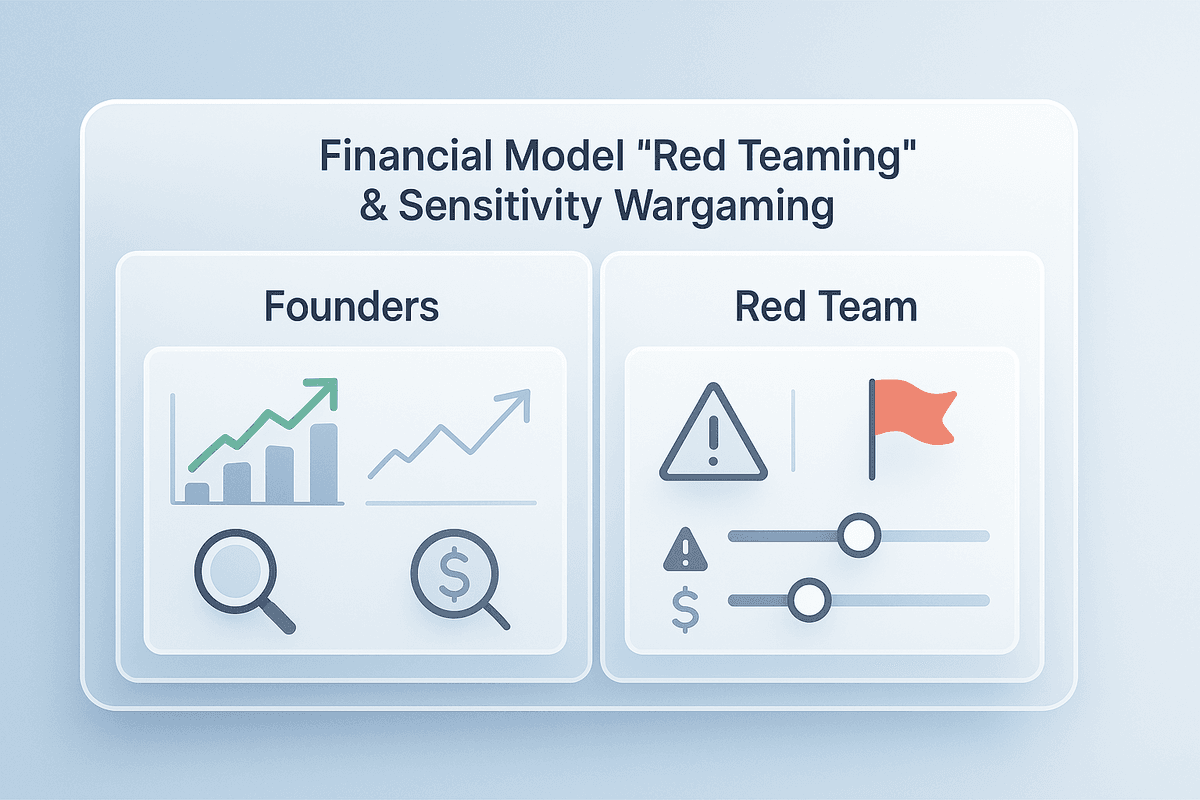
Illustration for 4. Financial Model "Red Teaming" & Sensitivity Wargaming
Goal:

Test the feasibility and interdependencies of the proposed milestones.

Technique:

Input Curen's key milestones (technical, commercial, funding). Ask the LLM to identify potential bottlenecks, resource conflicts, or critical path dependencies. Simulate the ripple effect of a delay in one key milestone.

Creative Prompt Example (Gemini/GPT-4o):
"Here are Curen's key milestones for the next 18 months post-seed: [List milestones like: Q2-Complete 5kW prototype; Q3-Begin 6-month cycle testing; Q4-Secure LOI for pilot; Q1+1-Hire Head of Manufacturing; Q2+1-Finalize Pilot Agreement]. Identify the 3 most critical dependencies where a delay would have the largest cascading negative impact on subsequent milestones and the planned Series A fundraising timeline. If the 'Begin 6-month cycle testing' milestone is delayed by 4 months due to unexpected technical issues, how does that specifically impact the timing and feasibility of the subsequent milestones?"
Impact:

Improves the realism of the roadmap, identifies critical areas needing de-risking, helps prioritize resources.
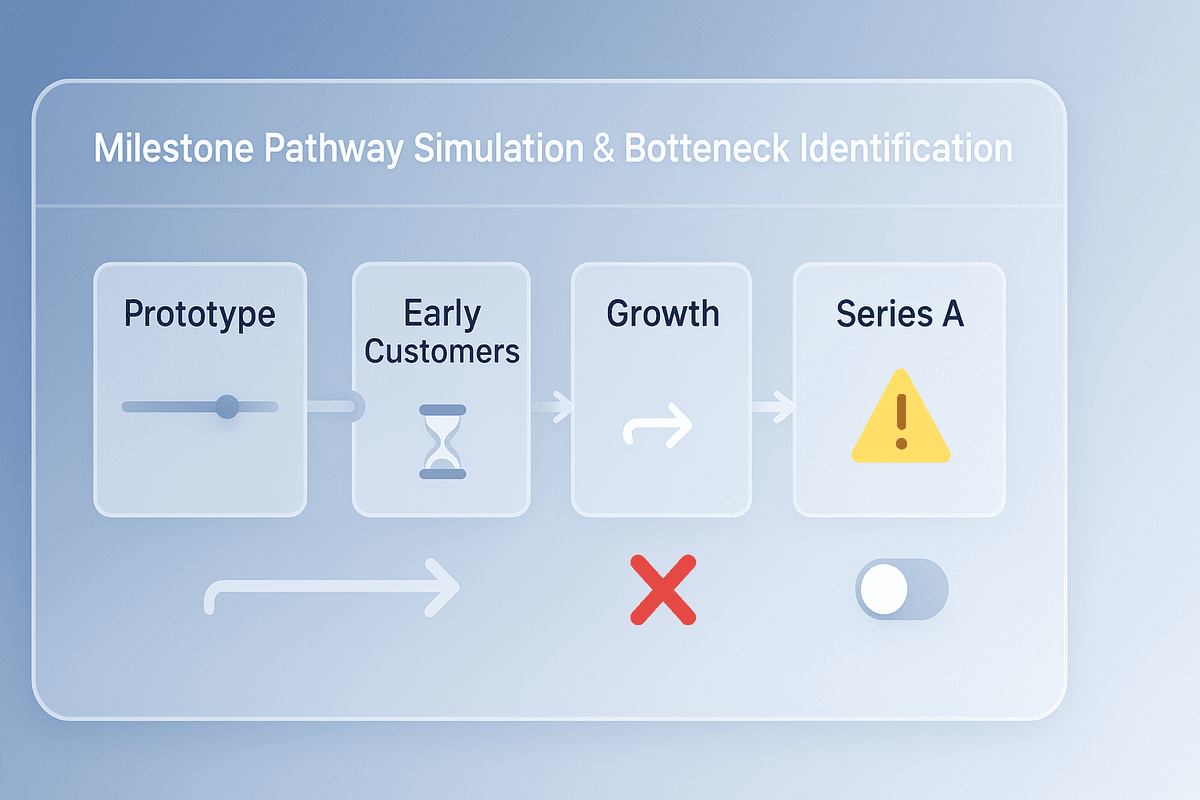
Illustration for 5. Milestone Pathway Simulation & Bottleneck Identification
Goal:

Test the assumptions behind international expansion or partnership strategies.

Technique:

Building on the user's "Cross-Cultural Tester," simulate specific interactions like negotiations or market entry planning with an LLM acting as a stakeholder from the target culture.

Creative Prompt Example (Gemini/GPT-4o):
"Act as a potential strategic investor from South Korea representing a large industrial conglomerate interested in energy storage manufacturing JVs. Curen (Finnish startup) is pitching a partnership. Based on typical South Korean business practices emphasizing established relationships, long-term commitment, and risk mitigation through clear hierarchical approval, what would be your top 3 concerns or questions during initial talks? Simulate a brief negotiation snippet focusing on disagreements over IP ownership vs. manufacturing exclusivity rights."
Impact:

Uncovers potential friction points, informs negotiation strategy, and highlights the need for cultural adaptation in GTM plans.
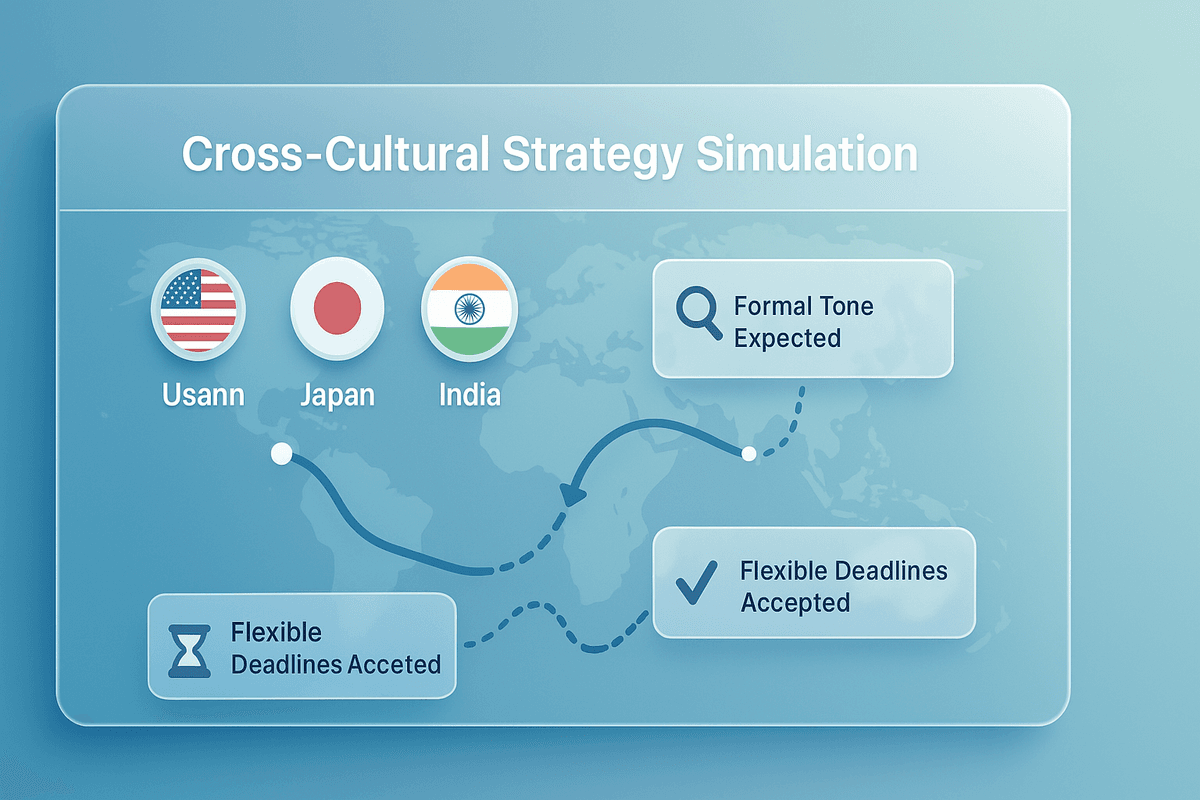
Illustration for 6. Cross-Cultural Strategy Simulation

Tools for Simulation

  • LLMs (Gemini/GPT-4o):Essential for persona embodiment, complex scenario generation, reacting to inputs, simulating dialogue, and performing basic calculations/sensitivity analysis within the simulation.
  • Perplexity/Search:Useful for gathering background information to make the personas and scenarios more realistic (e.g., details about competitors, market trends, cultural business norms).
  • Spreadsheet Software (Human driven, AI assisted):While AI can red team assumptions, the core financial model building often still happens here. AI can help generate formulas or analyze outputs.